Start With a Fresh Look
A tidy closet begins with knowing exactly what you have. Before buying storage bins or rearranging shelves, take everything out of the closet. This may seem like extra work, but it gives you a clear view of the space and prevents items from being pushed into hidden corners.
As you empty the closet, group similar items together. Place shirts in one pile, pants in another, and shoes, bags, accessories, and seasonal clothing in separate groups. Seeing everything at once makes it easier to spot duplicates, forgotten items, and pieces that no longer fit your lifestyle.
Clean the empty closet before putting anything back. Dust shelves, wipe surfaces, vacuum the floor, and check for loose hooks or damaged hangers. A clean space creates a better foundation for staying organized.
Keep Only What You Use
Closet organization is much easier when the space contains items you actually wear or use. Review each item and ask a few simple questions:
- Does it fit comfortably?
- Have I worn or used it recently?
- Is it in good condition?
- Does it work with other items I own?
- Would I choose it again today?
Create separate groups for items to keep, donate, repair, recycle, or decide on later. Be careful with the “decide later” pile, since it can quickly become a new source of clutter. Place a limit on this group and review it within a set time.
If you have not worn something in a year and it does not serve a special purpose, it may be time to let it go. Sentimental items can be stored separately so they do not take up valuable everyday closet space.
Choose a Simple Closet Layout
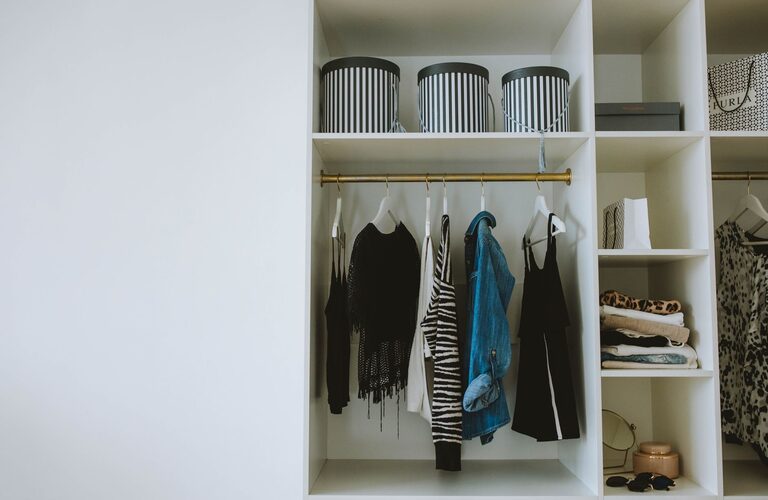
Arrange your closet based on how you use it, not just how it looks. Frequently worn items should be easy to reach, while special occasion clothing and seasonal pieces can go on higher shelves or toward the back.
A helpful layout might include:
- Everyday clothing at eye level
- Work or special occasion clothing in a separate section
- Shoes together on a rack or shelf
- Bags and accessories near the clothing they match
- Seasonal items in labeled containers
You can also organize clothing by type, color, or both. For example, place all shirts together and arrange them from light to dark. The best system is the one you can follow without much thought.
Leave a little open space between sections. An overfilled closet is harder to use and makes it more likely that items will become wrinkled or misplaced.
Use Matching Hangers
Matching hangers can make a closet look more orderly and help clothing hang at the same height. Slim hangers are especially useful because they take up less room than bulky plastic or wooden styles.
Use the same type of hanger for similar clothing when possible. For example, shirts can go on slim hangers, while structured jackets may need sturdy hangers with wider shoulders. Avoid forcing heavy items onto hangers that cannot support them.
Try turning all hangers in the same direction. After wearing an item, return it with the hanger facing the opposite way. At the end of several months, you will have a quick visual guide to the clothing you rarely wear.
Make Shelves and Drawers Work Harder
Folded clothing often becomes messy when items are stacked too high. Keep stacks low enough that you can remove one piece without disturbing everything else. For drawers, fold clothing vertically so you can see each item instead of placing pieces in flat layers.
Drawer dividers can help separate socks, underwear, workout clothing, and accessories. Small boxes or baskets can provide similar organization on shelves without requiring a permanent installation.
Use shelf space efficiently, but avoid filling every inch. A little breathing room makes it easier to put things away and helps prevent piles from falling over.
For handbags, use shelf dividers or place smaller bags inside larger ones. Store shoes in pairs and use clear boxes, open racks, or labeled containers so you can find what you need quickly.
Store Seasonal Items Separately
Seasonal clothing can take up a large portion of a closet even when it is used only part of the year. Store heavy coats, holiday clothing, swimsuits, or winter accessories separately when they are out of season.
Use breathable containers for clothing and label each container clearly. Avoid storing delicate fabrics in damp areas or placing heavy items on top of pieces that can crease easily.
Before storing seasonal items, wash or clean them according to their care instructions. Stains and odors can become harder to remove after several months in storage. Make sure everything is completely dry before packing it away.
When a new season begins, use the changeover as an opportunity to review your clothes. This makes it easier to notice items that were not used and may no longer be worth storing.
Add Labels and Helpful Storage Tools
Labels are useful when several people share a closet or when storage containers look alike. Label bins by category, such as “scarves,” “summer shoes,” or “special occasion clothing.” Clear labels make it easier to return items to the correct place.
Choose storage tools that solve a specific problem. Useful options include:
- Over-the-door organizers for shoes or accessories
- Small bins for belts, scarves, and hats
- Hooks for frequently used bags
- Shelf dividers for folded clothing
- Under-bed containers for seasonal items
Avoid buying organizers before measuring the closet. Storage products that are too large may create more crowding. Measure shelves, drawers, and hanging areas first, then choose tools that fit the space.
Create Easy Daily Habits
A closet stays tidy when organizing becomes part of your regular routine. Put clothing away as soon as possible instead of leaving it on a chair or floor. If an item is clean, return it to its place. If it needs washing, place it directly in the laundry area.
At the end of each day, take two minutes to reset the closet. Hang up loose clothing, return shoes to their rack, and place accessories in their containers. This small habit prevents clutter from building up.
Use a one-in, one-out rule for clothing when practical. When you bring home a new item, consider removing one similar piece. This keeps the total number of items manageable and creates space for things you truly enjoy.
Review the Closet Regularly
Even a well-organized closet needs occasional attention. Set aside 15 to 30 minutes once a month to check for misplaced items, overfilled sections, and clothing that needs repair or donation.
A deeper review every few months can include cleaning shelves, rotating seasonal items, and checking storage containers. Keep donation bags or boxes in an accessible place so unwanted items can leave the closet promptly.
The goal is not to create a perfect display. A successful closet is one that helps you get dressed easily, protects your belongings, and can be maintained with simple habits. Start with fewer items, give everything a home, and make the system convenient enough to use every day.